Friday, 4 February 2022

Covid-19 : How much Vitamin D do we need ?

How much Vitamin D should we take?



It is as well to go back to the beginning. 

Emergence of rickets

Rickest was perhaps the first disease of industrial civilisation.

During the 19th century it was clear that the childhood bone disease rickets was very rare, probably unknown, in the coastal communities of Scotland and the mountain communities of Austria, but it became increasingly common in the industrial cities. It was realised that the heavily polluted atmosphere was the cause, but what could be the treatment? Going to live in the mountains of Austria was not a realistic proposition for those living in cities. Similarly the population of Glasgow could not relocate to the coast.

So it was important to identify the factors of living on the coast, or in the mountains, that could somehow be brought to the populations of the cities. In Austria, children affected with rickets and tuberculosis (they often co-existed) had go to mountain fresh air, and as it turned out, the Sun shining out of clear air.

In the coastal communities of Scotland, cod liver oil was the answer. The fact that its active ingredient was unknown was not important: empiricalism was fine. It was obvious from observation and experience that cod liver oil could heal rickets and improve health. No more information was required. There had been no 'Randomised Controlled Trials', but large numbers of informal observations. The dose was ill-defined, just a spoonful a day.

The important thing is that in both Scotland and Austria it was agreed that the cause of rickets was atmospheric pollurion and indoor work, with little exposure to the sun..

Identification of Vitamin D

It was in the early 20th century that chemistry advanced to allow an analysis of cod liver oil, extracting the active ingredient. It was tested using laboratory mice. The amount of Vitamin D was so tiny that it could not be weighed and so it had to be measured by its biological effect. This was not easy and there had to be an international standard that would be equivalent to defined weights. It was decided and accepted that one unit of Vitamin D was the amount that was necessary for the optimal growth and apparent health of a ten gram immature mouse. Because it was accepted by all, it was called an International Unit, iu. 

It was much later that it became possible to measure Vitamin D by weight. The mass of one unit was found to be 20 billionths of a gram, a very tiny amount.

We can scale up from the mouse. If one unit is the requirement of a ten gram mouse, a sixty kilogram human would require about 6,000 units. 

This is a good starting point. Basing the dose of a Vitamin D supplement on body weight is sensible, 100 units per kilogram per day. 

Recomendations from the UK Standing Committee on Nutrition (SACN) tells us that the recomended dose of vitamin D supplement is 400 units each day. This is based on the need to avoid rickets in children. Bone health is a steady state process, very different from escalation of defensive immunity. SACN only suggests that Vitamin D might have a role in immunity but is hardly convinced of this.  Perhaps in the interests of caution, half the mouse equivalent dose might be adequate, 3,000 units each day for a 60kg person, 5,000 units each day for a 100kg person.

The need for monitoring and adjustment of dose

There is obviously variation in the need for individuals and so follow up assessment is necessary.. 

It is the same with insulin (discovered in 1922). The starting point for the dose is one unit per hour, the amount normally produced by the body. Once again insulin, identified at about the same time as Vitamin D, is measured in bilogical units, still maintained even though insulin can now be measured by mass.

 For convenience and because of the short half-life of insulin, 24 units per day is usually given as 8 units three times a day, or 16 units in the morning and 8 units in the late afternoon. 

Adjustments are made to meet the requirement of the individual as monitored by blood testing of blood glucose or HbA1c. There is no value in monitoring the blood levels of insulin as the effect of insulin is so variable. Type 2 diabetes is mainly due to insulin resistance, something not well-understood but which reduces the effect of insulin. In Type 2 diabetes blood levels of insulin are usually increased in that we are dealing with resistance not deficiency. The body's production of insulin increases in an attempt to overcome resistance, but the maximum production can be reached before this occurs and so diabetes develops.

There is also a variation of effect of Vitamin D, but this is quite rare and results from genetic variations in the structure of the Vitamin D Receptor, VDR polymorphisms. The way to assess routinely the appropriate dose of Vitamin D is to measure the amount of it circulating in the blood. But in doing so we do not measure, cholecalciferol, Vitamin D itself.

Vitamin D within the body

Most of our Vitamin D is produced in the skin by the action of UV from the sun on the oil 7-dehydro-cholesterol (7-DHC) that is synthesised in the skin (exceptin the very elderly.

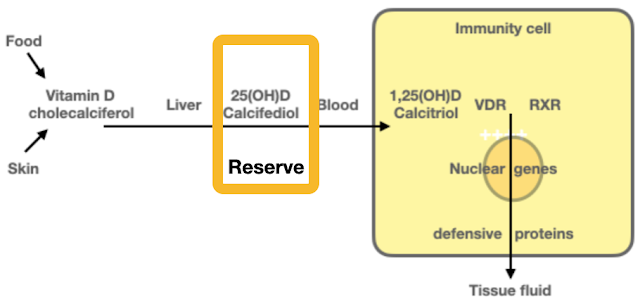
When Vitamin D is produced in the skin, taken by mouth, or given by injection, it is taken in the blood to the liver. It then undergoes a slow conversion (by the addition of an -OH group) to 25(OH)D, also known as Calcidiol or Calcifediol. This is the important form of Vitamin D which is the reserve circulating in the blood, like petrol or deisel in the fuel tank of a car, or charge in a battery. 
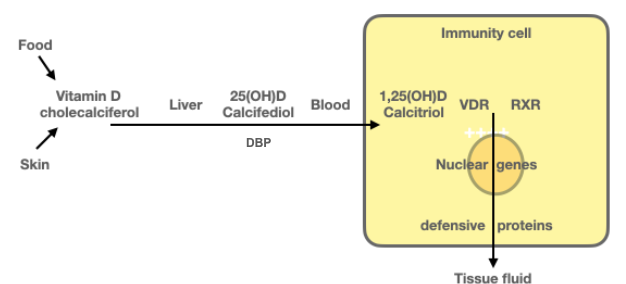


Figure 1, Pathway of Vitamin D activation and action

25(OH)D, a simple and accurate term, is carried in the blood bound to specific protein, called of course D-binding protein (DBP). 

Genetic variations – polymorphisms

LIke all proteins DBP is synthesised in the body from a template that is genetically encoded. It is in our genes, and with all genes mutations (chemical errors) can occur. When mutations are compatible with life they can become a variation within the species. They are then called 'polymorphisms', different forms. But they might still give a disadvantage, and of course mutations are millions of times more likely to give a disadvantage rather than an advantage. In the reasonably well recorded history of humankind during more than two millenia, has there been a single advantageous mutation? There have certainly been millions of mutations that have been incompatible with life or causing serious disadvantage.

If there is a DBP polymorphism, the blood level of Vitamin D measured in its circulating form of 25(OH)D will not be able to give an accurate assment of Vitamin D status, causing the blood level to be inevitably deficient. This is however rare but is likely to encountered by a Vitamin D clinical specialist.

In practice the blood level of VItamin D as 25(OH)D is used as a measure of Vitamin D status, determining whether an individual is or is not deficient. It is also used to determine the appropriate dose of a supplement to correct Vitamin D deficiency.

'Ideal' or 'normal'?

In the treatment of diabetes, or thyroid disorder (over- or under-activity), or hypertension, or body weight, we do not just give a single dose of a tablet or injection, or diet to all, but we define an ideal target. We aim at an ideal blood glucose or HbA1c, or T4 and TSH, or blood pressure, or body weight. And so it is with Vitamin D. With all the ideal is identified by careful clinical observation.

It is better to use the term 'ideal' rather than 'normal'. 'Normal' is based on an average with the population distributed reasonably evenly on both sides of the average. But if most people are obese there will be a skew, and average 'normal' weight will be excessive, not ideal. We must aim for 'ideal', that which gives the greatest health advantage.

The extent of VItamin D deficiency

Most people have blood levels of Vitamin D that puts them at a disadvantage. The has been shown in many studies before and during the Covid-19 pandemic. An example is a population survey in Germany in 2015. 
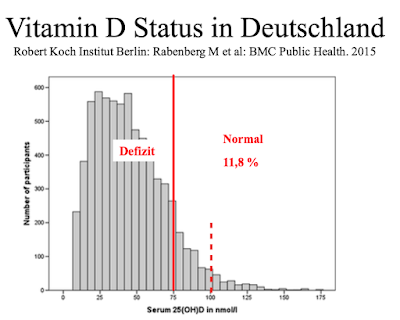
Figure 2. Vitamin D status in Germany

We can see in Figure 2 the result of a population sample study undertaken in Germany in 2015. There is an obvious 'skew' in the distribution. We can see that only 11.8% of the sample had a blood vitamin D greater than 75nmol/L, which is 30ng/ml. More than half had a blood level less than 50nmol/L, which is only 20ng/ml.

The solid red line represents the threshold: research during the pandemic has shown us that lower vitamin D levels are associated with a increased risk of serious Covid-19m whereas above this threshold the risk of serious illness is very low. 

The dotted red line represents 100nmol/L, which is 40ng/ml. This should be the safe target blood level.

A recent study in Israel observed 1176 people admitted hospital with Covid-19 and of whom 253 in retropect were found to have records of previous blood levels of Vitamin D. 
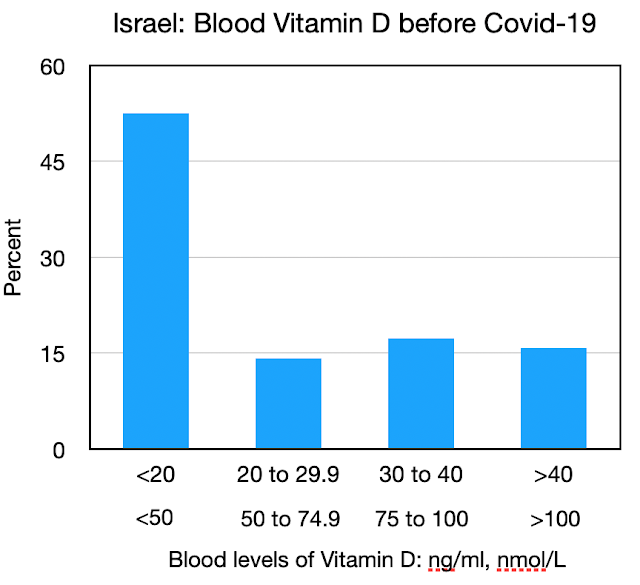
Figure 3. Blood levels of Vitamin D in Israel

Once again we find that half the group of patients had blood levels of Vitamin D less than 20ng/ml, 50nmol/L.

The serious disadvantage of Vitamin D deficiency

I have reviewed the findings of this study from Israel in a previous Blog post. If we look at the patients who were critically ill with Covid-19 we can see a summary of the findings of the study.
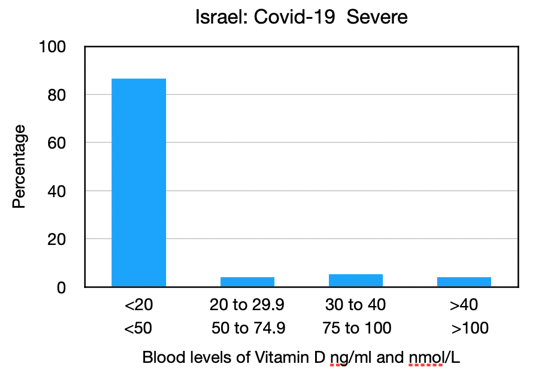
Figure 4. Blood levels of VItamin D predicting severity of Covid-19


It shows what previous studies had shown, that patients with critical or fatal Covid-19 almost entirely had low levels of Vitamin D. We can also judge the blood level of Vitamin D that appears to be 'safe', like a safe blood pressure or glucose. This can only be judged by careful observation, as in Israel. The role of observation has been repeatedly trivialised during the pandemic (apart from in vaccine assessments), but science is based on careful observation.

Observation tells us that a blood Vitamin D level above 30ng/ml, 75nmol/L, is perfectly safe and reduces considerably the risk of critical or fatal Covid-19. To aim at the range of 40 to 60 ng/ml, 100 to 150 nmol/L is wise, to make certain that we have a full reserve. Various studies, including that from Israel, have shown no cases of Vitamin D excess.

We can also see from the study in Israel that very few people have a blood level of Vitamin D greater that 30ng/ml, 75nmol/L, despite living in a very sunny country. Vitamin D deficiency is very common, 50% in this sample, remembering that the blood testing was well in advance of the illness.

The present definition of Vitamin D deficiency

Vitamin D deficiency should be defined as a blood level less than 30ng/ml, 75nmol/L. It has previously been defined as less than 10ng/ml, 25nmol/L but this was based on the prevention of rickets, not on optimisation of immunity and protection against serious infection. As mentioned above SACN, the UK Standing Advisory Committee on Nutrition, does not acknowledge the pivotal role of Vitamin D in defensive immunity, just mentioning that there is a 'suggestion'. I hope that during the pandemic of Covid-19 SACN has learned as much about the importance of Vitamin D as I have learned.

There is sometmes the expression of 'Vitamin D insufficiency', meaning somewhere between deficiency and adequacy or ideal. 'Insufficiency effectively  means little reserve, a situation best avoided if possible, whether Vitamin D, fuel in the car, money in the bank. When setting out on a car journey it would be unwise to have an insufficiency of fuel.

I have used the analogy previously of the motor car and the importance of a full tank of petrol or diesel, or a full battery charge, when setting out on a long and uncertain journey. And so it is with Vitamin D during our uncertain journey through life: we do not want to 'conk out' on the way, before reaching our expected destination.

The need for a constant supply of VItamin D

It is important that we have a fairly constant supply of Vitamin D so as to maintain the reserve of 25(OH)D, calcifediol, in the blood. This is difficult when we live closer to the North Pole than to the Equator, and especially with indoor work. Solar UV has little opportunity to produce Vitamin D in our skin.

We have seen that in temperate zones serious Vitamin D deficiency is common and serious illness can result from it. In the interests of the health of the public it would be sensible to screen for blood levels of Vitamin D and correct with appropriate supplement if deficient. Screening should certainly occur early in pregnancy so that no baby is born with Vitamin D deficiency.

This is the ideal but before we get to that point, a 60kg person living in temperate zones should take a supplement of Vitamin D 3,000 units daily, scaled up or down depending on body weight. Even if you are not deficient, taking this will be of no disadvantage.


Winter sun at 45 degrees north of the equator, but no Vitamin D production


Sunday, 2 January 2022

Covid-19 & Vitamin D : Malaysia, Indonesia – Protease inhibitors

Can we learn anything from the experience of Malaysia and Indonesia?

Viral protease inhibitors


I have been following the Covid-19 pandemic in Malaysia as I have visited this country on several occasions. It is a good example of a country very close to the Equator, and by contrast the UK is closer to the North Pole than to the Equator.

Quiet in 2020

While the UK and Europe were experiencing large numbers of cases and deaths from Covid-19 during early and late 2020, all was quiet in Malaysia (population 32.7 million, see Figure 3) and neighbouring Indonesia (population 273.5 million), even though they are very close to China, the epicentre of the pandemic. 

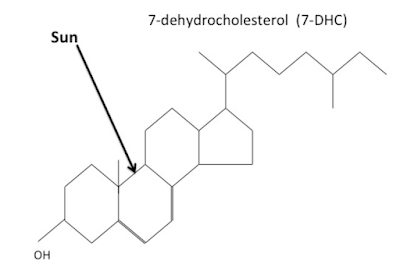
In the UK, the high numbers in early 2020 diminished as expected in the Spring and Summer, as a result of the production of vitamin D in our skin with the mid-day Sun being more than 45 degrees above the horizon. This gives the ambient sunlight a sufficiently high energy to break the specific intramolecular bond in the 7-dehydrocholesterol (7-DHC) molecule synthesised in the skin so as to form Vitamin D (see Figure 1). 

Figure 1. Action of UV on the molecule of 7-dehydrocholesterol (7-DHC)


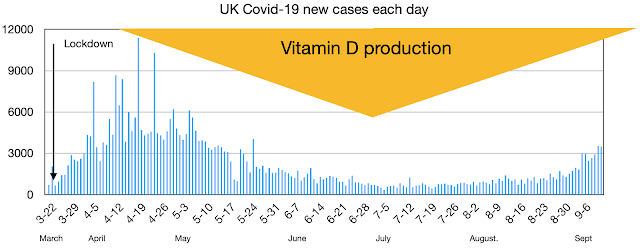
Figure 2, below, shows how the pandemic in the UK settled during mid-2020, under the influence of Vitamin D produced in the skin.

Figure 2. UK: Covid-19 cases each during 2020 


At the Equator, UV from the Sun has high intensity all the year round, giving those who live there the opportunity for adequate vitamin D production with subsequent optimal immunity and health advantages. This was the most obvious and most simple explanation for the low numbers and deaths from Covid-19 during the early part of 2020, despite the close proximity to China. However this did not continue and Covid-19 cases increased rapidly in late 2020. This must be regarded as the arrival of the virus, as there are no solar seasons close to the equator.

Figure 3. Malaysia  – Covid-19 cases per day 2020


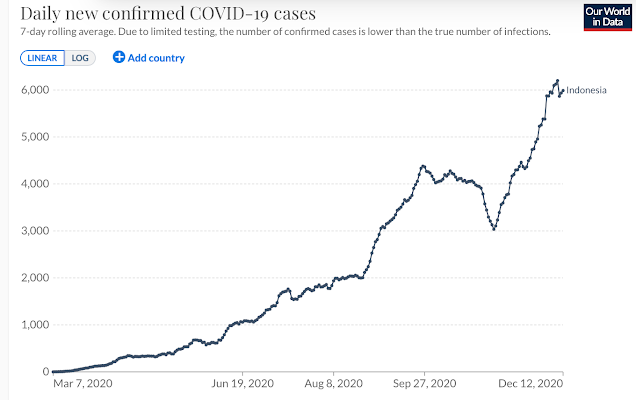
Adjacent Indonesia (Figure 4) showed a similar pattern during 2020. In relationship to populations size, the cases in Malaysia were much higher than in Indonesia. The reason for this is not obvious.


Figure 4. Indonesia  – Covid-19 cases per day 2020


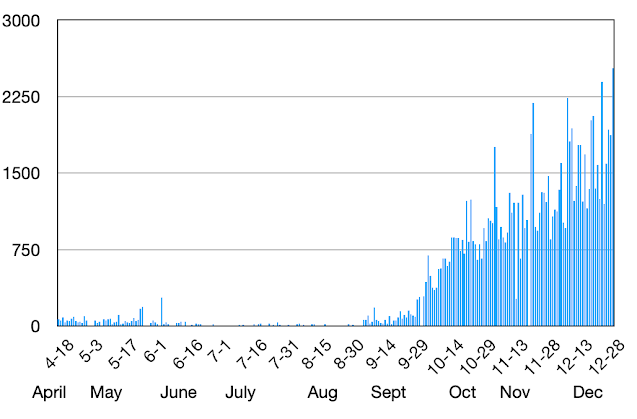
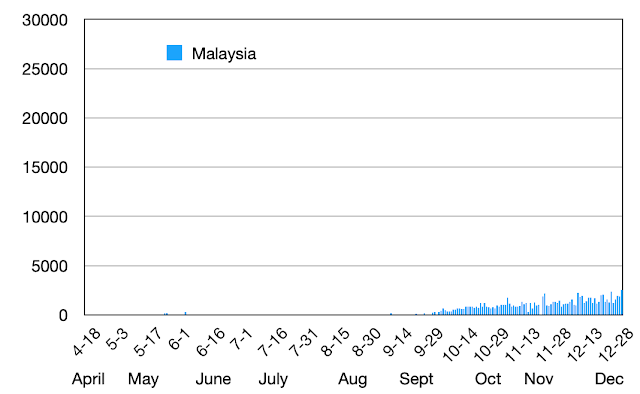
Note in Figure 3 that in late 2020 there was a maximum of 2,250 cases per day in Malaysia. We can regard this as "quiet", especially if we display it in the same scale (Figure 5) that will be used for 2021 (Figure 6).

Figure 5. Malaysia  – Covid-19 cases per day 2020
(same data as Figure 3, but different scale)


2021 was very different 

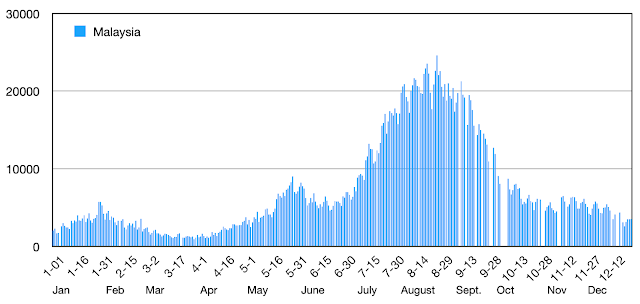
The early months on 2021 continued to be "quiet" in Malysia, Covid-19 case numbers reaching a maximum of about 5,000 per day. However during the latter part of the 2021 there was a considerable increase in cases to 22,500 per day (Figure 6).

Figure 6. Malaysia – Covid-19 cases each day in 2021


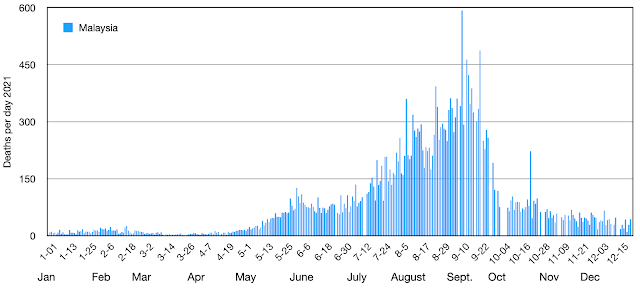
Covid-19 deaths had been very few in Malaysia during 2020 and early 2021, but there was a very rapid increase during the middle of the year (Figure 7). 


Figure 7. Malaysia – Covid-19 deaths each day in 2021

The reason for this was not obvious. With Covid-19 cases being so low for more than year, why was there was such a dramatic increase in June 2021? What happened immediately before the increase that might have caused it?

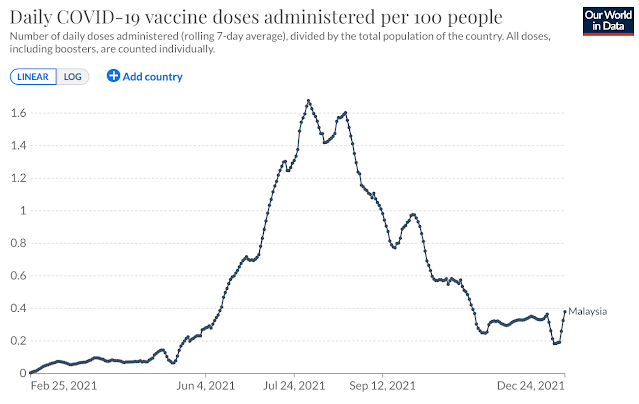
The answer is a major vaccination programme, starting at the beginning of June 2021 (Figure 8).


Figure 8. Malaysia – vaccination initiative starting in early June 2021


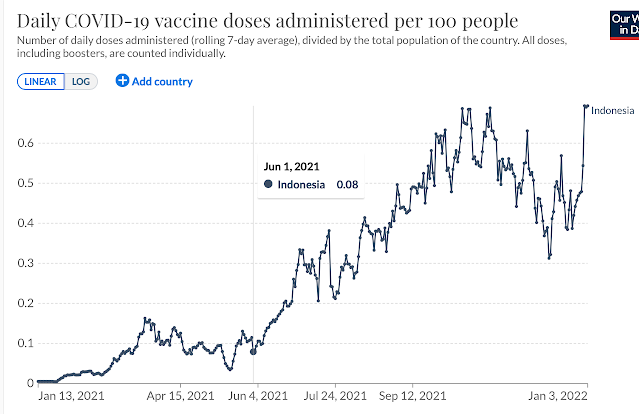
The vaccination initiative was similar in Indonesia (Figure 9), but more gradual as the country is much larger and widespread than Malaysia.

Figure 9. Indonesia – vaccination initiative starting in early June 2021


We are seeing what also occurred in many if not most countries of the world, a large increase of Covid-19 immediately following the onset of a large vaccination initiative.

Reason for Covid-19 increase following vaccination initiative

Why might a vaccination programme cause such a surge in Covid-19 cases? Some people might regard it as a direct "poisoning" effect of the vaccines, with damage to immune mechanisms, but I suggest an alternative explanation which would be readily reversible. It all depends on the vitally important role of VItamin D, which appears to be understood by very few people, including our officials.

To recap: most of our Vitamin D is produced in the skin from synthesised 7-DHC. Otherwise it is taken by mouth, or it can be given by injection. However it all passes in the blood stream to the liver. Here it undergoes slow hydroxylation to form 25(OH)D, which is the important reserve circulating in the blood. It is also known as calcidiol or calcifediol. When required for immune escalation, this is taken into the immunity cells and further hydroxylated to its active form 1,25(OH)D, calcitriol.


Figure 19. Vitamin D and its essential role in defensive immunity

I have discussed this in a recent Blog post. The vaccination induces an intense inflammatory immune reaction, which involves activation of T-cells and other cells of immunity. It requires the appropriate nuclear genes to be switched on, and for this the intracellular heterodimer VDR–RXR must be activated. And what is essential for the activation of VDR specifically? Vitamin D in its own fully activated form 1,25(OH)D, calcitriol. 

We need a full tank

We never know when we are going to encounter a serious infection, such as Covid-19, but when we do it is essential to have a good reserve of vitamin D as 25(OH)D in the blood. This will be required to activate the defensive immune response. 

It is like a car journey. If we are setting out on a long and uncertain car journey it is both sensible and indeed essential to have a full fuel tank. If not there is a danger of "conking out", coming to a halt in the middle of nowhere, or possible on a busy motorway.


And so it is with Vitamin D. If we encounter a serious infection and we have a low reserve of Vitamin D in the blood, there is a danger of critical illness or death. We can "conk out" in just the same way as the car with an empty tank. Unlike a car, we do not have Vitamin D level indicator, but these days it is simple to have the blood level of Vitamin D tested.

We know the critical blood levels of Vitamin D. Experience from Israel has confirmed previous experience that a blood level greater than 40ng/ml (100nmol/L) is safe, a full reserve. On the other hand a level of 20ng/ml (50nmol/L) is very low, and there is a risk of danger ahead.

Fuel, power, and Vitamin D comsumption

There is another analogy. When driving a car on a long journey it is essential to have a full tank because fuel can only be used once. When it has been used (combustion) all that remains is exhaust gases. There is a limit to the number of miles or kilometers to the gallon or litre, or to a full battery charge. When diesel, petrol or battery charge are consumed, the tank must be refuelled or the battery recharged. 

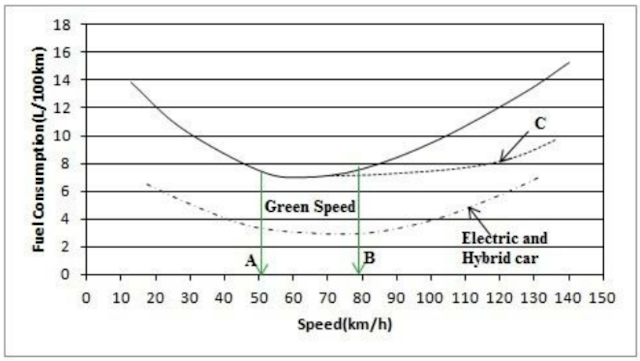
Fuel/power consumption is low at steady state "Green" speeds, but it increases when the car is driven faster (fuel consumption is high at low speeds as inefficient low gears are used). In a similar way, Vitamin D comsumption is low when we are in steady state good health, but when we are ill, when disease is actve, Vitamin D consumption increases to enable defensive immunity. 

Figure 20. Fuel consumption related to car speed


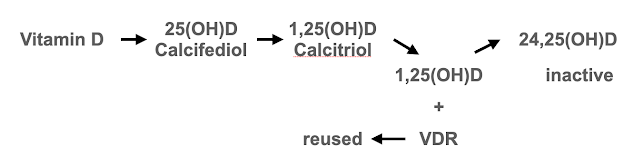
A constant amount of Vitamin D as the circulating 25(OH)D is essential to supply its intracellular activated form 1,25(OH)D, which links to and activates VDR (Vitamin D Receptor). The VDR–RXR dimer switches on appropriate genes, but it also automatically stimulates the enzyme 24-hydroxylase. This is safety mechanism that converts 1,25(OH)D into 24,25(OH)D. This is an irreversible process and 24,25(OH)D is inactive. a molecule of vitamin D can only be used once. 


Figure 21. Vitamin D molecule can only be used once

This a success of evolution. If 1,25(OH)D were to remain active, then during an immune escalation the level of 1,25(OH)D would build up to toxic levels. The enzyme 24-hydroxylase ensures that this does not happen. However it necessitates a constant supply of vitamin from the skin or by mouth, and a large reserve of 25(OH)D in the blood to iron out as much a possible natural fluctuations of Vitamin D production during the year.

Vitamin D deficiency in Malaysia and Indonesia

It might be thought that people living in Malaysia and Indonesia, both on the equator, have good reserves of Vitamin D with all year round production of it. But not so. 90% of babies born in Indonesia are deficient of Vitamin D, and this represents the Vitamin D status of their mothers. During childhood Vitamin D levels increase as a consequence of exposure to the Sun. but this is constrained in adult life.

Generally people in hot tropical countries avoid the Sun as much as possible. . But it is important to remember that Malaysia and in particular Indonesia have very large Muslim populations, and skin cover by clothing  is carried to extremes. UV from the Sun does not penetrate most clothing, and so Vitamin D deficiency is inevitable. 

Vitamin D deficiency and Covid-19 vaccination

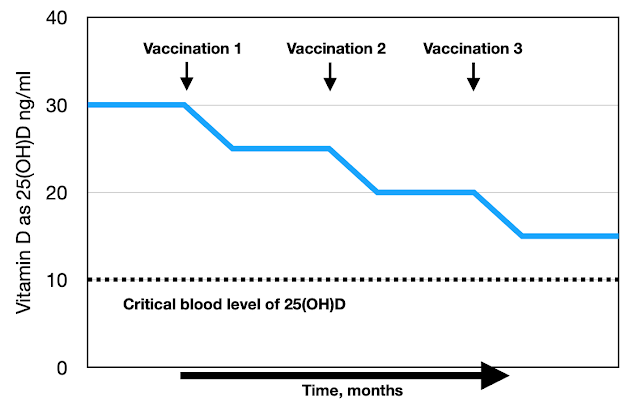
How many of the populations of Malaysia and Indonesia develop mild or subclinical Covid-19 during 2020 is unknown, but they must have encountered the vaccination programme when generally deficient of Vitamin D. The intense immune response following vaccination (and it definitely is intense as judged by the high frequency of mild and transient symptoms) will have consumed a great deal of Vitamin D, but the quantity involved is unknown. As far as I am aware there has been no research so far on the effect of vaccination of blood levels of Vitamin D. 

Figure 22 illustrates what will be happening. Vitamin D will be sunsumed by vaccinations, and at this time of the year without natural replenishment. The blood level of Vitamin D will inevitably go down and might reach critically low levels – unless a Vitamin D supplement is taken (dose about 4,000 units daily).

Figure 22. Illustration of the effect of vacc=inations on VItamin D

The mass vaccinations must have resulted in mass serious and critical Vitamin D deficiency. The immune process cannot happen without consuming Vitamin D. In fact without adequate Vitamin D the vaccinations could not have given the expected level of protection against Covid-19 – the level and duration of protection has been much less than anticipated, hence so many cases among the vaccinated.

Viral protease inhibitors

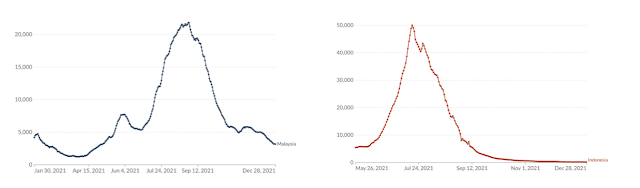
The peaks obviously settled, as they always do. But here we see a difference between Malaysia and Indonesia.

In Malaysia the decline of cases and deaths dropped but not completely. There is a continuing steady state of 3,000 to 4,000 cases per day, and 20 to 40 deaths per day.

On the other hand in Indonesia there are many fewer at 100 to 200 new cases each day and only about 10 deaths each day.

Figure 23. Malaysia & Indonesia Covid-19 cases per day –
 the endings of the peaks


This difference is interesting. I can think of only one plausible answer and that is the additional therapeutic intervention in Indonesia. I am not aware of Vitamin D supplements being given to the population, but apparently Ivermectin therapy was adopted in Indonesia on September 1st 2021. This went against the advice of the WHO, but it was based on the experience of several countries in the east which had good results from Ivermectin, together with much published evidence. 

Ivermectin

I have not followed the Ivermectin story in detail and I am by no means an expert on it. It appears that Ivermectin is "controversial" and it seems to be clear that there has been a successful and co-ordinated mis-information campaign against it. A meta-analysis of 74 papers evaluating Ivermectin showed benefit in 71 of them. I suspect that most informed people accept the value and safety of Ivermectin within its recommended dose, but very few people are informed. This has been the problem during the Covid-19 pandemic: we have not been supplied with much information, just sound-bites. 

The most absurd and desperate reason to be vaccinated against Covid-19 came from the UK Prime Minister Boris Johnson as reported in the national press on Christmas Eve:


Among other properties, Ivermectin is a viral protease inhibitor, which makes it effective against a number of mammalian parasites, including viruses.

Pfizer has developed its own viral protease inhibitor, during development known as PF-07321332, and unofficially as "Pfizermectin". On December 23rd 2021 it received an Emergency Use Authorisation (EUA) from the US FDA. It is now called Paxlovid.

Now we see why Ivermectin has been ridiculed and buried. Patients with Covid-19 have been told officially that there is no treatment available. They have been denied treatment with Ivermectin 12mg per day for five days from the onset of symptoms. 30 years experience has shown an excellent safety profile of Ivermectin in the correct dose. 

The EUA for Paxlovid was given on the "understanding" that there were no other treatments available for Covid-19, hence the essential denial and burial of Ivermectin. 

Exactly the same thing happened with Vitamin D, official denial that it might be of any benefit so that EUAs could be granted for the vaccines.

The main problem with both Vitamin D and Ivermectin is that they are too cheap. There is no big money to be made, unlike with vaccines and Paxlovid, which will be sold at several hundred times the price of Vitamin D and Ivermectin.

Perhaps it is true to say that the Covid-19 pandemic has been an exercise in transfering money from the poor (the great majority of us) to the very rich. In the process there have been many avoidable deaths and undue pressure being put on the hospitals.

Vitamin D consumption

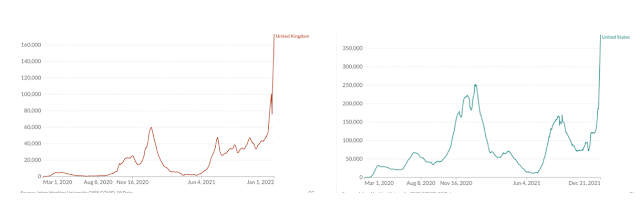
But the most important thing at present is the rapid escalation of cases, especially on North America and Europe. My interpretation is that the undoubted intense inflammatory immune response to the vaccinations is inevitably consuming Vitamin D (Figure 22). The resulting immune deficiency is driving the increase in cases, which although usually mild will consume even more Vitamin D, and so we can expect infections of all sorts to become more frequent. This is particularly important during the winter months as it will be a few months before we start to produce Vitamin D.

New York has experienced a cluster of tuberculosis. This infection is well-established as developing when immunity is suppressed, as in AIDS, but also resulting from Vitamin D deficiency.

There is every medical reason why Vitamin D should be used extensively at the present time, especially if vaccinations are being given increasingly and at shorter intervals.

Vitamin D is needed now.


Figure 24: Covid-19 cases per day UK & USA at the end of 2021


Thursday, 9 December 2021

Covid-19 and Vitamin D: strong evidence of benefit from Israel

The importance of Vitamin D in the Covid-19 pandemic: reports from Israel


It has been known for more than 40 years that vitamin D is of vital importance in the escalation of defensive immunity at the time of infection. It is also well-established that people with defective immunity are very susceptible to infection, with a high risk of death, and this has been illustrated well by the experience of AIDS. It has also been established on numerous occasions in many countries that vitamin D deficiency is very common, leading to sub-optimal immunity in many people. 


In life in general, people are not aware of their vitamin D deficiency and the problems that result from it. Health issues such as respiratory infections, post-operative infections and recovery from surgery, problems in pregnancy, the development of diabetes, certain cancers, and multiple sclerosis are accepted as bad luck, even though they are known to have an increased incidence in people with vitamin D deficiency. 


But when faced with a pandemic of Covid-19, a virus against which we have no learned immunity, the rapid time-scale brought disadvantages of vitamin D deficiency and impaired immunity into sharp focus. It was soon after the onset of the pandemic that we learned of the high susceptibility of those with low blood levels of vitamin D to critical and fatal Covid-19.  It was obvious that a public health imperative to minimise ICU admissions and deaths, would be to correct vitamin D deficiency as soon as possible. But it was not to be.


Susceptibility of particular population groups


It became clear that the great majority of Covid-19 deaths occurred in the elderly, but we were told that they were just old, the official and unquestioned narrative that had no scientific foundation. Vitamin D is produced by the action of UV from the sun on 7-dehydrocholesterol (7-DHC) that is synthesised in the skin. It has been known for forty years that the thin dry skin of the elderly does not synthesise adequate amounts of 7-DHC and so vitamin D deficiency is inevitable, no matter how much time is spent in the sun. 


It was also clear that people of Black African and South Asian ethnicity were particularly susceptible to critical and fatal Covid-19. The official narrative is that this has been the result of socio-economic disadvantage and racism. My reporting of the fact that of 26 working doctors in the UK who died from Covid-19, 25 (96%) were of Black African and South Asian ethnicity went officially unacknowledged even though it was the paradox that invalidated the socio-economic proposal. Well-known vitamin D deficiency in these ethnic groups was the obvious and scientifically established explanation, not officialy acknowledged.


In a previous Blog post I reported that the group of people in the UK hit hardest of all by the pandemic of Covid-19 have been Haredi Jews, those who are most orthodox. I pointed out that they have sun-avoiding behaviour, not by intent but as a result of clothing and other traditions that result in virtually no exposure of the skin to the sun. 


VItamin D in Israel in 2001


Research in Israel 20 years ago investigated vitamin D status in Jewish new mothers in Israel, identifying as to whether they were orthodox (Haredi) or non-orthodox. Blood testing for vitamin D was undertaken after delivery. It was found that in the orthodox mothers the average mean blood level of vitamin D was 13.5ng/ml (34nmol/L) compared to 18.6ng/ml (46.5nmol/L) in non-orthodox mothers.


We can see in Figure 1 that extremely low blood levels of less than 5ng/ml, 12.5nmol/L, were found in 5.7% of orthodox mothers and in 2.7% of non-orthodox. Less than 10ng/ml (25nmol/L) was found in 32.7% of orthodox mothers and in 13% of non-orthodox. We will see from a later study how extremely low are these blood levels.


A very small vitamin D supplement of 400 units per day was given to some women during pregnancy and it had a small effect. As a result of this supplement, 2.2% of orthodox mothers had a blood level less than 5ng/ml, 12.5nmol/L, but none of the non-orthodox mothers. 13% of the orthodox mothers receiving the small vitamin D supplement had a blood level less than 10ng/ml, 25nmol/L, compared to 8% in non-orthodox.


Figure 1. Jewish mothers in Israel – vitamin D status


The messages from this study are that:

  • vitamin D deficiency is very common in Israel, despite a sunny environment
  • it is more common in orthodox mothers
  • vitamin D supplement of 400 units per day is of little benefit
  • blood levels of vitamin D are higher in the summer in non-orthodox mothers
  • in orthodox mothers, blood levels of vitamin D do not increase in the summer.


Mukamel MN, Weisman Y, Somech R, et al. Vitamin D deficiency and insufficiency in orthodox and non-orthodox Jewish mothers in Israel. Isr Med Assoc 2001; 3: 419-421.


Vitamin D in Israel in 2021


We now have the results of a new study from Israel. It looks at the outcome of Covid-19 related to pre-infection Vitamin D status, and "Guess What?" The outcome is far better in people with the highest (not toxic) blood levels of Vitamin D. Let us look at the details.


The study was of 1176 patients admitted to the Galilee Medical Centre on account of Covid-19. 253 of these had blood levels of Vitamin D measured prior to infection. For the purpose of analysis they were divided into four groups based on blood levels: 


  • less than 20ng/ml, 50nmol/L
  • 20 to 29.9ng/ml, 50 to 75nmol/L
  • 30 to 40ng/ml, 75 to 100nmol/L
  • greater than 40ng/ml, 100nmol/L.


The analysis shows many interesting features, as displayed in the tables and figures.


Figure 2. Blood levels of Vitamin D in advance of Covid-19

Figure 2 shows the distribution of blood levels of Vitamin D. 52.5% of those admitted to hospital had a previous blood level less than 20ng/ml, 50nmol/L. This in itself identifies a serious public health problem that was identified in new mothers in 2001 and remains twenty years later. Only 15.8% had a level greater than 40ng/ml, 100nmol/L.


Table 1 shows the relationship between the blood levels of Vitamin D in advance of Covid-19 and the severity of illness when it happened. The Table shows the numbers in each group, and also the percentages of Vitamin D status in each illness category.


Table 1. Relationship between severity of Covid-19 and pre-existing blood levels of Vitamin D

Table 2 illustrates the dramatic effect of pre-existing blood levels of  Vitamin D on death from Covid-19. A blood level of greater than 20ng/ml, 50nmol/L, makes death very unlikely. A blood level of less than this put an individual at considerable risk of death, an excess risk that can be eliminated by the public health action of correcting Vitamin D deficiency.

Table 2. Deaths from Covid-19 and pre-existing blood levels of Vitamin D


We can see in Figure 3 that most patients with mild illness have higher blood levels of Vitamin D, greater than 30ng/ml, 75nmol/L.


Figure 3. Blood levels of Vitamin D in patients with mild Covid-19


When we look at Figure 4 we find that in moderate illness the patients are predominantly those with low blood levels of Vitamin D


Figure 4. Blood levels Vitamin D in patients with moderate Covid-19


Figure 5, below, shows that severe Covid-19 occurs almost exclusively in those with low levels of Vitamin D, less than 20ng/ml, 50nmol/L.


Figure 5. Blood levels Vitamin D in patients with severe Covid-19


Figure 6 shows that critical Covid-19, patients, those who would have been admitted to intensive care, were almost exclusively those with the lowest blood levels of Vitamin D. On the other hand patients with blood levels greater than 30ng/ml, 75nmol/L, did not require intensive care unit support.


Figure 6. Blood levels Vitamin D in patients with critical Covid-19


We can look at this is another way. What is the pattern of illness that occurs with Covid-19 in people with the lowest blood levels of Vitamin D, less than 20ng/ml, 50nmol/L?


Figure 7 demonstrates that those with the lowest blood levels of Vitamin D are most likely to have severe or critical illness. 


Figure 7. Covid-19 in patients with the lowest blood levels of Vitamin D, <20ng/ml <50nmol/L


When the blood level of Vitamin D is above the critical level of 20ng/ml, 50nmol/L, the threat of severe or critical illness is very much reduced, as shown in Figure 8.


Figure 8. Covid-19 in patients with blood levels of Vitamin D
 20–29.9ng/ml, 50–74.9nmol/L


When the blood level of Vitamin D is greater than 30ng/ml, 75nmol/L, Covid-19 is likely to be mild, shown in Figure 9.


Figure 7. Covid-19 in patients with blood levels of Vitamin D
 30–40ng/ml, 75–100nmol/L


Figure 10, below, shows that when the blood level of VItamin D is greater than 40ng/ml, 100nmol/L, severe and critical Covid-19 does not occur. 12 patients out of 13 had just mild illness, and one had just moderate illness.


Figure 7. Covid-19 in patients with the highest blood levels of Vitamin D, >40ng/ml, >100nmol/L


Mortality


38 of the 253 patients died. Deaths, occurring in hospital, were almost entirely in patients with the lowest levels of Vitamin D, less than 20ng/ml, 50nmol/L. (Table 2, repeated)

Table 2. Deaths from Covid-19 and pre-existing blood levels of Vitamin D


It appears that the three patients who died with blood vitamin D levels of 30ng/ml, 75nmol/L, they did so without going to the Intensive Care units, for reasons not explained.


For the purpose of death analysis, there are just two groups, those with vitamin D less than 20ng/ml, 50nmol/L (34 patients), and those with higher levels (4 patients).


If you were to develop Covid-19, what blood level of Vitamin D would you choose?


Figure 11. Deaths from Covid-19 and pre-existing blood levels of Vitamin 


Ethnicity


The study did not distinguish between orthodox and non-orthodox Jews, but we have seen that in the UK orthodox Haredi Jews have had an exceptionally high mortality rate from Covid-19. The two main ethnic groups in Israel are Jews and Arabs, but there are several minority ethnic religious groups within Arab people. For the purpose of analysis, the study divided its sample into Arab and non-Arab.


The Vitamin D status of the two groups is shown in Figure 12.


Figure 12. Blood levels of Vitamin D in Israel


The frequency of very low blood levels of vitamin D less than 20ng/ml, 40nmol/L, is almost twice as high in the Arab group as in the non-Arab. The reason is not investigated directly, but is most likely to be the result of sun-avoiding behaviour, with very little exposure of the skin to the sun in Muslim people.


There is no mention of illness category or mortality related to ethnicity, but we can assume that the large proportion of Arab people with very low blood levels of Vitamin D would lead to a high incidence of serious and fatal disease. It is likely that, as in the UK, this will also be the case in the most orthodox Jews.


Age


The age categories for analysis are:

  • less than 50 years
  • 50 to 65
  • 65 and older


The relationship between age and vitamin D status is shown in Figure 13.


Figure 13. Blood levels of Vitamin D related to age


The result is not surprising. Older people have on average lower blood levels of vitamin D. In this study, of the patients with Covid-19 aged 65 or older (grey bars), 59.4% had blood vitamin D levels less than 20ng/ml, 50nmol/L, compared to just 13.5% of those aged less that 50 years.


We have seen above that older people progressively fail to synthesise adequate amounts of 7-dehydrocholesterol, and as a result UV from the sun is unable to produce sufficient vitamin D to enable optimal immunity.


Vitamin D levels in co-morbidities


The 2021 study from Israel provides additional data of considerable importance, an analysis of co-morbidities.


It has been recognised in the UK and other European countries that Black African and South Asian ethnicities, and increasing age were major factors in the risk of serious, critical, and fatal Covid-19. But certain pre-existing illnesses, co-morbidities, were also recognised as increasing such risk. These are not surprising to those who are aware of clinical practice. The co-morbidities recognised in the study from Israel are as follows:


  • COPD, chronic obstructive pulmonary disease
  • CHD, coronary heart disease
  • CKD, chronic kidney disease
  • Diabetes
  • Hypertension
  • Obesity, BMI >30


The relationship of these to blood levels of Vitamin D are shown in Table 3.


Table 3. Covid-19, co-morbidities, and pre-existing blood levels of Vitamin D 


Absolute numbers in each group are shown in Table 3, and it is obvious that all these co-morbidities are strongly associated with the lowest blood levels of vitamin D, less than 20ng/ml, 50nmol/L.


A study performed in the UK in early 2021 demonstrated the same thing and I have reviewed it previously. It demonstrated very similar findings to this table, but the findings were interpreted in an absurd way. If there was a high Covid-19 death rate from CHD, age, or ethnicity, then these were the stated reasons and Vitamin D deficiency was regarded as incidental. In other words the interpretation was that there was no evidence that Vitamin D deficiency was of any importance. The vitamin D deficiency of ethnic minorities was left untreated, with countless deaths resulting. The paper completely failed to follow the scientific process of finding the common factor (in this case Vitamin D), a vital step in understanding as described by William of Ockham. 


The conclusion of this well-publicised but extremely poor UK study was ultimately withdrawn, but this was not reported in the national press. 


Conclusions


The Israel study accepts that the totality of the data indicate a pivotal role of pre-existing blood levels of Vitamin D in predicting the outcome of Covid-19.


The conclusions and implications of the two studies from Israel are perfectly clear and irrefutable. The blood level of Vitamin D is the major determinant of outcome from symptomatic Covid-19. The target blood level must be 40ng/ml, 100nmol/L, so as to optimise immunity against severe and critical Covid-19. Had this approach been instituted as a public health initiative at the onset of the Covid-19 pandemic, there would have been many fewer deaths and very much reduced pressure on hospitals and intensive care units.


Blood level of Vitamin D less than 20ng/ml, 40nmol/L, should be regarded as critically low and requiring immediate correction. Testing the population for blood level of Vitamin D must become a public health policy. This is easily affordable.


More work is required to establish the dose of Vitamin D that is required to correct inadequate blood levels. The 2001 study from Israel indicated clearly that 400units per day given during pregnancy was hopelessly inadequate and did not eliminate serious Vitamin D deficiency. This is the dose that UK heath agencies advise, but they state that the more realistic dose of 4,000 units per day is safe. This is the dose that is regarded as appropriate by most medical scientists who study Vitamin D. 


I have indicated previously that by definition and before the days of physical measurement, one unit of Vitamin D was defined as the daily requirement of a 10 gram immature mouse. We can scale up from that so that the daily requirement of a 60kg human would be 6,000 units, and for a 120kg obese human 12,000 units each day. To be cautious, perhaps half of these doses would be a reasonable starting point for determining the dose that would be appropriate in achieving the blood levels of 40ng/ml, 100nmol/L. This must be the target level, as the study from Israel indicates.


The important thing is that rather than just giving Vitamin D supplement, the achievement of target blood levels must be recorded. It is standard practice in the treatment of anaemia and diabetes, and similarly blood pressure in hypertension. This must be a public health priority.